 |
Home > Music Lessons
Asher Farber
Piano and Theory Instructor
Since the beginning of his musical journey since the age of four, Asher Farber has experienced many joys, challenges and benefits that the study of music provides. As a former participant and subsequent winner of various awards in the Kiwanis Music Festival for four consecutive years, he understands very well the difficulties that young musicians encounter while performing and learning music. This is why he feels it is important for every student to learn about their own character, confidence, and musical persona while they are learning the elements of music, along with having fun! He has many years of experience of teaching privately and enjoys working with children. Asher is currently a third year student in his Bachelor of Music in Piano Performance at the University of Ottawa, studying with Andrew Tunis. He is also a former student of Sandra Webster.
Mr. Daniel Al-Khafajy
Guitar, Bass and Theory Instructor
Daniel Al-Khafajy is an accomplished musician studying a Bachelor's degree in Music at Carleton University. Under the teachings of Gary Elliot, Daniel has trained in both the classical and Jazz fields as well as studied music theory. Starting his musical career at a young age, Daniel has been exposed to the musical world all his life. A guitarist of 10 years, he has taught for numerous facilities across the city in both french and english. Planning on becoming a high school music teacher, Daniel knows the time and dedication it takes to master his instrument; and of course passes on his teachings to his students in a fun but always educative style. Daniel's program consists of a progressive learning structure, gradually teaching theory, reading and performance as a collective.
Mr. Eduardo Flores Suarez
Guitar/Drums/Percussion Instructor
Eduardo has been a performing musician since 1978. He attended to Humber College of Applied Arts and he graduated in 1984 with a major in composition and arranging. As a performing musician Eduardo has the opportunity to play various styles and venues, from local bars and dining rooms to Nassey Hall in Toronto and the Smithsonian Institute in Washington. Over the years Eduardo has developed a large repertoire of styles, bringing music reading and stylistic knowledge together. In addition to this Eduardo plays contemporary piano, guitar, bass and drums allowing him to have an excellent over all musicianship. Last but definitely not least Eduardo is well acquainted with the workings of music theory, melodically harmonically and rhythmically, allowing him to extrapolate each portion of the music to explain how they work together.
Mr. Sergei Chechui
Piano, Theory, Accordion, Voice Instructor
Sergei Chechui worked with many educational institutions both in Canada and in the USSR. In 1990, he received the Excellent Educational Worker of the Ukraine award from the Ministry of the Ukraine. As part of the Svitanok Ukrainian Dance Ensemble, he participated in the International Carnival of Cultures in Puerto Rico in December 1995. His involvement in concerts and performances is long indeed. As a teacher, his experiences include the Artemovsk Secondary School, the School of Dance and the Ottawa School of Ukrainian Dance. He also has a letter of standing in Music and Voice by the Ontario Ministry of Education.
Ms. Elizabeth O'Brien
Piano and Theory Instructor
Originally from British Columbia, Elizabeth is part of a large and musical family. She started studying piano at a young age and began teaching and entering competitions in her teens. Over the years, she has had experience as a church organist, accompanist, private instructor, and solo entertainer. While she has training with the Royal Conservatory of Music, she also plays and enjoys teaching pop, rock, and folk music. Being very interested in Canadian Celtic music, she has accompanied fiddlers and other folk musicians over the years—a skill which she also teaches. She has taught in music studios of the Ottawa region for the past year and a half, and is proud of the success she has had in increasing the confidence and musical skills of her students. When working with children—especially beginners—she strives to bring imagination and enthusiasm to the lessons and to share the joy of music.
Ms. Caitlin Cope
Flute, Piano, Ear Training, Theory Instructor
Caitlin Cope was born and raised in Ottawa, Ontario, and began playing the flute at the age of 12. She began studying with flutist Natasha Chapman while attending high school. Caitlin has completed her Bachelor of Music Degree with a Minor in Arts Administration at the University of Ottawa in the spring of 2008, studying with Joanna G Froerer of the NAC Orchestra. She has also received a Master of Music degree from the University of Western Ontario in June of 2010 where she studied with Fiona Wilkinson. At UWO, she taught extensive solfege and ear training classes to undergraduate students. Caitlin is also a dedicated pianist since a young age, and has maintained a teaching studio in the Ottawa area since 2002. Many of her students have achieved high grades in piano and flute, for the Royal Conservatory of Music examinations.
Ms. Kathy N. Nguyen
Piano and Theory Instructor
Kathy has always possessed a strong appreciation for music, which has become a major part of her life. At a very young age Kathy demonstrated a strong interest in music, many of these influences came from her mother, a dancer and actress. Kathy is a versatile musician. Her instruments include piano, organ and guitar, but her main focus has always been piano. She completed her musical training at the Saigon National Music Academy, achieving a diploma in pedagogy. She began her teaching career in 1982 for the School of Music and Arts at the Saigon Cultural Center. Since 1992, Kathy continued her career in Canada as a piano teacher, a church pianist, a choir conductor, as well as a rehearsal director. Kathy has many years of teaching experience and has many successful students to her reputation. Many of her students have attained first class honors with the Royal Conservatory of Music, and became excellent musicians.
Nora Pellerin
Violin Instructor
Nora Pellerin is currently completing her Masters in Violin Performance at the University of Ottawa, under the tutelage of David Stewart. Her previous degree in violin performance was completed at McGill University. Nora has privately taught violin extensively in Toronto, Montreal and Ottawa, as well as at several music camps, including the Interprovincial Music Camp near Thunder Bay, the Thornhill Chamber Music Institute and at Summer Music in Galway in Galway, Ireland. Nora is a member of many orchestras, including the Ottawa Symphony Orchestra and the University of Ottawa Symphony Orchestra. In addition to classical music, Nora is an experienced fiddler, specializing in M�tis fiddling, occasionally performing with the M�tis Fiddler Quartet.
Mr. David Santry
Piano, Flute and Theory Instructor, Choir Director, Professional Musician
Music has been a passion of David since the age of 7 where he pursued the Royal Conservatory of Music with very classical training. Performance and competition have always been David's main goals and he stress those musical attributes as a music teacher, which he has been for the past 6 years. Upon completing his Bachelors of Music with a specialization in piano pedagogy at the University of Ottawa, he opened a music school with my colleague Mate Al-Khafajy. Outside of our business, David is actively involved with collaborative recitals, performances at special events and am currently the director for the Ottawa East Seventh Day Adventist Church Choir. His most recent competition was at the USOMC 2007 in California where he placed top three in several categories, each with over 40 international competitors. Although his main focus is in classical music, he believes it essential to study other genres as well, such as contemporary, rag and jazz. David has been privileged to study under the musical guidance of Claudia Cashin-Mack, Colin Mack, Jean-Paul Sevilla, Andrew Tunis and Susan Telner. David is currently pursuing his ARCT in performance.
|
MONTHLY PRICING
� Payment is due on the first week of every month.
� Monthly payments depend on 4 or 5 lessons within the month.
20-minute Lessons (ages 5 and under):
4 Lesson Package – $71.80
5 Lesson Package – $89.75
Each Lesson – $16.00
30-min Lessons:
4 Lesson Package - $95.80
5 Lesson Package - $119.75
Each Lesson – $23.95
45-min Lessons:
4 Lesson Package - $139.80
5 Lesson Package - $174.75
Each Lesson – $34.95
1-hour Lessons:
4 Lesson Package - $183.80
5 Lesson Package - $229.75
Each Lesson – $45.95
*There is a one-time registration fee of $25
*24h notice is required for a make up lesson. (3 per year)
FAQ
At what age can my child take lessons?
Every child is unique. There is no set age at which children are ready. At Accel Music Studios students have started as early as 3 1/2 to as late as 80 years old.
Which instrument should I choose?
Although Accel Music studios offer a variety of instruments, certain instruments work better than others depending on the student. For very young beginners we suggest piano because of its visual nature and the involvement of fundamental musical rudiments.
How do the lessons work?
All of our lessons are private 1-on-1 sessions that take place weekly at your registered time slot at the same time every week with the same teacher. All of our lessons take place at our studio.
What if we cannot make our lesson?
We do require a 24 hour notice for absences. Your lesson credit will not to be charged.
What are your other policies?
Please refer to our registration form which is available on www.accelmusic.ca.
Are your teachers qualified?
All of our teachers have at least their Bachelor�s Degree in Music. We go through an extensive hiring procedure which involves a unique training program to ensure a standard quality of education.
Do I get to meet the teacher?
We offer a FREE assessment to all of our new students and parents, which gives a chance to ask specific questions about learning material, goals, expectations, practicing habits, instrument purchase inquiries etc.
|
| |
Our qualified staff prepares students for RCM Examinations, competitions as well as our semi-annual recitals. We offer lessons in a variety of styles, from strictly classical to jazz, pop or Latin. |
Piano
What is it?
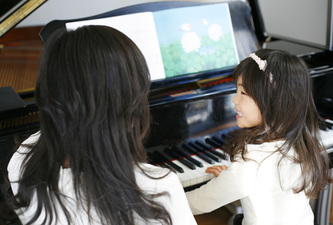
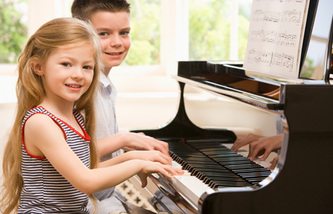
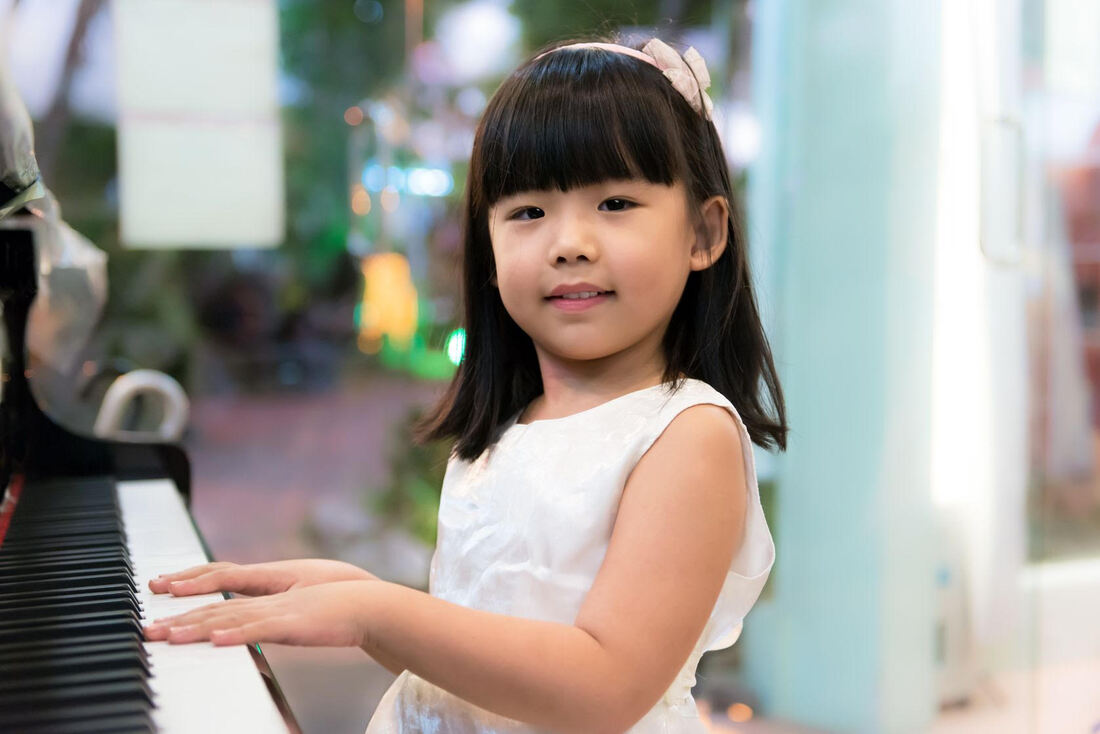
The piano is one of the most commonly taught instruments. Due to its visual nature, piano is one of the easier Instruments to pick up for a beginner student. Being exceptionally versatile, the piano is capable of embracing many musical styles such as classical, jazz, and pop music. There are a variety of tools incorporated in piano education geared towards students of all ages, from the young beginner to the eager adult.
What does piano teach?
� Simultaneous staff reading (treble and bass clef)
� Hand to eye coordination
� Pitch and ear training
� Motor-skill development
� Music fundamentals
|
Guitar
What is it?
The guitar provides students with the opportunity to learn many different musical styles, ranging from classical, jazz, and pop music. The guitar is becoming increasingly popular, but just like any other instrument, it requires the fundamental basics to be learned before any student can sound like �Guitar Hero�. A student can choose from classical guitar, acoustic guitar and electric guitar.
What does guitar teach?
� Tuning skills
� Hand posture
� Picking
� Chord structure
� Aural skills
Guitar
What is it?
The guitar provides students with the opportunity to learn many different musical styles, ranging from classical, jazz, and pop music. The guitar is becoming increasingly popular, but just like any other instrument, it requires the fundamental basics to be learned before any student can sound like �Guitar Hero�. A student can choose from classical guitar, acoustic guitar and electric guitar.
What does guitar teach?
� Tuning skills
� Hand posture
� Picking
� Chord structure
� Aural skills
|
Voice
What is it?
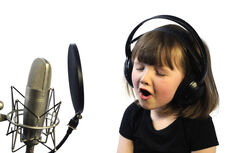
The voice was the world�s first instrument. Every voice has a different quality and is completely unique from all others, offering a wide variety of repertoire that is unique to each student. Humans have the amazing ability to learn and develop skills that students might not even be aware of. This is why voice is one of the most fascinating and intricate Instruments. Singing can branch into many types of genres such as opera, pop, classical, jazz, Broadway, contemporary, as well as musical theater which goes hand in hand with our drama program.
What does voice teach?
� Proper posture
� Breathing technique
� Pitch and ear training
� Voice development
� Self - confidence
Voice
What is it?
The voice was the world�s first instrument. Every voice has a different quality and is completely unique from all others, offering a wide variety of repertoire that is unique to each student. Humans have the amazing ability to learn and develop skills that students might not even be aware of. This is why voice is one of the most fascinating and intricate Instruments. Singing can branch into many types of genres such as opera, pop, classical, jazz, Broadway, contemporary, as well as musical theater which goes hand in hand with our drama program.
What does voice teach?
� Proper posture
� Breathing technique
� Pitch and ear training
� Voice development
� Self - confidence
Voice
What is it?
The voice was the world�s first instrument. Every voice has a different quality and is completely unique from all others, offering a wide variety of repertoire that is unique to each student. Humans have the amazing ability to learn and develop skills that students might not even be aware of. This is why voice is one of the most fascinating and intricate Instruments. Singing can branch into many types of genres such as opera, pop, classical, jazz, Broadway, contemporary, as well as musical theater which goes hand in hand with our drama program.
What does voice teach?
� Proper posture
� Breathing technique
� Pitch and ear training
� Voice development
� Self - confidence
Voice
What is it?
The voice was the world�s first instrument. Every voice has a different quality and is completely unique from all others, offering a wide variety of repertoire that is unique to each student. Humans have the amazing ability to learn and develop skills that students might not even be aware of. This is why voice is one of the most fascinating and intricate Instruments. Singing can branch into many types of genres such as opera, pop, classical, jazz, Broadway, contemporary, as well as musical theater which goes hand in hand with our drama program.
What does voice teach?
� Proper posture
� Breathing technique
� Pitch and ear training
� Voice development
� Self - confidence
|
Bass Guitar
What is it?
It is important to note that learning the guitar is not the same as learning bass guitar. The bass guitar is very similar in appearance and structure to an electric guitar, but with a larger body and four strings tuned to the same pitches as the classical double bass. This instrument requires a completely different posture and finger technique. The bass guitar is an integral instrument in a modern band setting. The bass guitar gives opportunities for students to explore many genres such as jazz, blues, funk, rock, as well as pop.
What does bass guitar teach?
� Tuning skills
� Hand posture
� Improvisation
� Chording
� Aural Skills
|
Violin
What is it?
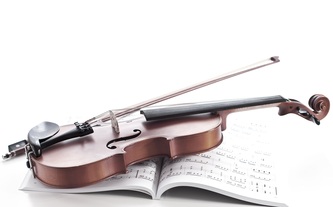
The violin introduces the world of orchestral Instruments to students. It requires a unique approach, where such things as proper posture and bow technique are required to produce a healthy and well-balanced tone. The nature of the instrument allows students to master a good aural understanding of tone and pitch. The violin�s charm allows students to apply their skills in solo work, orchestral, and chamber music.
What does violin teach?
� Develops hearing
� Pitch and tone production
� Bowing technique
� Posture
� Musicality
|
Woodwinds
What is it?
Woodwinds make up a section of Instruments which include flute, recorder, clarinet, saxophone, oboe and bassoon to name a few. Each instrument requires unique skills, but all share one aspect; they all require air to produce a sound. Proper tone production through breathing, posture and development of embouchure is important to excel with any of these Instruments. Woodwinds can be used in many genres, such as: jazz, classical and concert band settings, as well as in solo works.
What do woodwinds teach?
� Posture
� Tone production
� Breathing support
� Aural skills
� Embouchure
|
Brass
What is it?
Brass is a section of Instruments which include the trumpet, trombone, French horn, euphonium, and tuba. Each instrument requires unique skills, but they all share one similar aspect: the buzzing of the lips against a mouthpiece to produce a tone. These Instruments can be used in solo works, as well as in a band setting such as a concert band or a jazz band. Brass Instruments are used in many genres of music, such as classical, jazz, latin, and contemporary.
What do they teach?
� Breathing
� Posture
� Tone production
� Aural skills
� Embouchure
|
Drum Kit and Percussion
What is it?
There are a variety of Instruments that are included in this category. Drum set being the most popular, other Instruments such as the bongos, congas, djembe all require extensive technique to be played properly. Percussion Instruments require a strong understanding of rhythm before great results can be accomplished. The drum set, as the most popular choice, offers a variety of applications in genres such as jazz, funk, pop, rock, latin, and more.
What does drum kit and percussion teach?
� Rhythm
� Coordination
� Stick handling
� Complex counting
� Posture
|
|
 |
 |